
 Health insurance companies increasingly are using social media outlets such as Facebook, Twitter and YouTube to interact with patients, but they generally are not using such channels to engage with physicians, American Medical News reports.
Engaging With Patients
Health plans are trying out different strategies for establishing a presence on social media platforms, which are relatively new outlets for insurers. For example, some insurers are using social media tools to:
In addition, many insurers monitor comments about them that appear on social media sites. In some cases, the health plans respond directly to people who appear to need assistance.
Less Outreach to Physicians
Insurers generally are not using social networking websites to communicate with physicians.
Ingrid Lindberg, customer experience officer for Cigna, said reaching out to doctors is difficult because social media-based correspondence typically is not integrated with physicians’ workflow and is not a preferred communications outlet.
A WellPoint representative said the company is exploring ways to engage with physicians through social media, as well as through mobile devices.
Limitations to Social Media Strategies
Despite the growing popularity of social media, insurers are restricted in their use of such online tools because HIPAA privacy and security rules limit the sharing of personal health data.
To avoid violating privacy regulations, insurers that communicate on social media sites often redirect their interactions with consumers to telephone conversations (Berry, American Medical News, 1/24).
Source: iHealthBeat
 Health insurance investigators are considering social networking sites such as Facebook, MySpace and Twitter as tools to conduct claims investigations, the Los Angeles Times reports.
The insurance industry says fraud costs the U.S. up to $80 billion annually, accounting for up to 10% of total yearly health care spending.
Insurer Practices
According to National Insurance Crime Bureau spokesperson Frank Scafidi, insurers “look out for things that don’t add up.” For example, insurers could investigate someone who claimed an injury for work but had posted on Facebook about running a marathon.
Insurance companies also are examining whether data available on social networking sites can be used to help underwrite policies.
Mike Fitzgerald — a senior analyst at Celent, the insurance consulting arm of brokerage firm Marsh & McLennan — said insurers could find social media valuable to compare what individuals admit about lifestyle choices and what they reveal online.
Concerns
However, some insurance lawyers say that such practices could lead companies to monitor profiles to raise premiums or deny claims, the Times reports.
Vedica Puri — a partner at Pillsbury & Levinson, a law firm specializing in insurance — said, “The situation is coming up more and more in court where lawyers for insurance companies lay traps for the insured based on pictures or postings on Facebook or Twitter.”
Peter Foley, vice president of claims administration at the American Insurance Association, said insurance investigators could be deemed negligent if they did not scan social media sites for contradictions. He added that anything found on social networking sites should only be a starting point for investigations and not final proof of fraud (Li, Los Angeles Times, 1/25).
Source: iHealthBeat
For any questions or interest in social media for your practice, don’t hesitate to contact us.
 How much time do you spend on IT related issues? How long does it take for you to determine who to call when there is an IT issue? Do you have peace of mind that your IT infrastructure is current, secure and provides you the ability to have maximum up time?
These type of questions are often overlooked and ignored. Why is that?
When you hear terms like… viruses, updates, backups, etc. it often sends chills down your back especially when you are not an IT person. Trust us… we understand but it doesn’t have to be this way!
With Pulse’s Managed IT Services program, we can take those chills away and provide you with a peace of mind that will allow you to focus on what you do best… providing superb patient care!
Our IT Managed Services is the professional practice of transferring day-to-day related IT management responsibility as a strategic method for improved operations and reducing cost of ownership. Via Managed Services, our team is accountable, experienced and provides a cost effective financial model, for the functionality and performance of your IT systems.
With our Managed IT Services we can be the ones that deal with updates, backups, security, etc. to ensure that your practice is running real time and at maximum speed!
So, enjoy the benefits of control, efficiency, reduced costs, up time, etc. and partner with the most trusted company in the market!
To learn how Pulse can ease the pain of IT issues…
For any questions regarding our managed IT services, feel free to contact John Bybee at 615.425.2719 and you can discuss your practice’s needs with him.
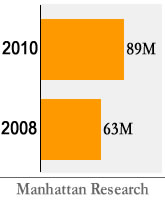 In 2010, 89 million U.S. adults tapped social media resources for health-related purposes, compared with 63 million in 2008 and 38 million in 2007, according to a Manhattan Research study.
Consumers who used social media for medical purposes created or consumed content on blogs, chat rooms, message boards, online communities and patient testimonials.
According to the study, certain medical condition groups that tend to skew older, such as patients with cancer, are more likely to use social media for health reasons than their average age would predict.
Results are based on a Q3 2010 survey of 8,606 U.S. adults ages 18 and older.
Source: Manhattan Research, “Cybercitizen Health U.S.”
For any questions on social media and how it would fit into your practice, don’t hesitate to contact us.
 Have you ever considered how much your file room is costing you? If you could make the paper charts disappear and convert that space to patient visitation rooms, how much additional revenue would your practice see in a week?
Practices often avoid scanning charts because of the time and headache required to do it in-house and the assumption that outsourcing is “too expensive.”
But practice managers that factor in the additional revenue that can be gained from the quick removal of patient charts realize that partnering with a qualified outsource scanning service can actually be a money maker.
Pulse Practice Solutions is the company to partner with! We provide patient chart conversion services for Healthcare organizations that have and/or are planning to implement EMR solutions.
We convert paper charts to indexed images, named PDF files, or any other digital format needed for import into new or existing EMR or Practice Management Systems.
We are a full service organization dedicated to helping Healthcare organizations such as yours and offer professional file preparation, scanning and indexing services.
If you simply wish to archive inactive charts rather than integrate them with an EMR, we can convert them to indexed digital images for easy retrieval and minimal cost.
Most importantly, we can do it faster and more efficiently than if your staff takes on the task. And once we’ve cleared your paper charts out of the office you’ll have additional space in which to see patients.
To learn how Pulse can ease your transition to the digital age…
Simply contact John Bybee at 615.425.2719 to discuss your practice’s needs.
Social media tools can be effective in maintaining participation in online health programs, according to a University of Michigan Medical School study, Healthcare IT News reports.
Research Details
Researchers found that an interactive social media site added to an Internet-based walking program significantly lowered the number of participants who dropped out.
The study showed that:
Implications
According to researchers, the findings indicate that adding social media features to online programs can reduce attrition, as well as costs associated with traditional interventions, such as face-to-face meetings.
The study authors added that cutting down on attrition rates could result in more positive health outcomes and greater cost savings.
Source: iHealthBeat
For any questions regarding social media and how to incorporate it within your practice, don’t hesitate to contact us.
What is Social Media? How is it defined? According to Wikipedia, it is defined as the following… Media for social interaction, using highly accessible and scalable publishing techniques. But how does this apply to Healthcare professionals?
Even though each social media tactic is different and would be deployed in various ways depending on your practice, the benefits are the same. One of the most challenging aspects of social media is determining which one is the best and how to use it! Our recommendation is pick one, deploy it appropriately and measure the results. If you need help, don’t hesitate to contact us. (Wink Wink)
In this edition of “The Pulse Beat”, you will find articles that provide more information about social marketing and why you should be leveraging this type of technology.
Thanks again and GREAT READING!
Social Media is Vitual to Healthcare Marketing
Traditionally, healthcare clinics have relied on physical media to reach local consumers. For example, doctors often send brochures and postcards to potential patients in their immediate vicinity to maximize response rates and ensure they reach the greatest number of local residents…Read More
Healthcare Marketing: 5 Social Media Examples
More than ever, it’s essential for hospitals and health providers to rethink their healthcare marketing mix to include social media.
The proof is in the numbers: 34% of consumers use social media to search for health information, according to research data…Read More
Social Media in Healthcare: Barriers and Future Trends
Social media has invaded health care from at least three fronts: innovative startups, patient communities and medical centers. The Health 2.0 movement has nurtured dozens of startups with creative concepts to revolutionize health care: tools from vertical search and social networks to health content aggregators and wellness…Read More
For any questions or needs regarding social media, feel free to contact John Bybee at 615.425.2719
Social media has invaded health care from at least three fronts: innovative startups, patient communities and medical centers. The Health 2.0 movement has nurtured dozens of startups with creative concepts to revolutionize health care: tools from vertical search and social networks to health content aggregators and wellness tools.
Patient communities are flourishing in an environment rich with social networks, both through mainline social communities and condition-specific communities. Meanwhile, hospitals and academic medical centers are diving into the social media mix with more than 300 YouTube channels and 500 Twitter accounts. Hospitals are moving from experimentation (Twittering from the OR to Flipcam videos) to strategic use of social media to enhance brand loyalty and recruit new patients. They are taking on monitoring and monetization of social media.
At the same time, health care organizations find challenges in adopting social media. Hospitals and medical practices are risk adverse and generally cautious about new technology trends without clear value. There are questions about whether social media use by hospital employees is a waste of time, or even worse, presents risks of violating HIPAA or leaking proprietary information. Hospital IT departments are concerned about security risks, such as the use of tinyurl.com, which can mask malicious Web sites. Privacy concerns, particularly the vulnerability of social media accounts, are also cited as a reason to avoid social media.
Current Trends in Social Media
Current trends to watch in social media in health care include:
An important distinction in this two-way conversation is between medical advice and medical information. Hospitals and providers need to walk a fine line between giving specific medical advice in the relatively public forums of social media and providing more generalized medical information.
At the same time, there are ways to create a conversation with health care consumers. Sites like Medhelp.org have provided this kind of information using medical experts to answer patient-submitted questions in general terms. For instance, promoting wellness is a win-win; medical information relevant to many is provided without specific medical advice for a patient’s medical condition.
The rise of e-Patients creates many opportunities for engagement. E-Patients are defined as those “who are equipped, enabled, empowered and engaged in their health and health care decisions.” E-patients can provide feedback not only on improving hospital Web sites but also as participants in quality improvement within the health system.
PHRs and Online Communities
As the similarities between online patient communities (e.g., http://www.patientslikeme.com and http://curetogether.com) and PHRs begins to blur, will PHR information from providers be shared with online communities with the appropriate privacy settings so that the user can decide what to share?
Recording one’s medical condition online and abandoning privacy are part of the “Quantified Self” movement. The Robert Wood Johnson Foundation’s Project Health Design uses the concept of “Observations of Daily Living,” which extends the quantified self to behavioral self-observations. The next step in quantified self is self-monitoring, also known as home monitoring and telemedicine. Being quantified in terms of one’s weight, blood pressure or blood glucose provides another way of self-monitoring and participatory medicine.
Some are predicting that in the near future, multiple monitoring devices will be phased out to give way to connections with smart phones that will record and transmit medical monitoring data directly to a PHR. Innovators, such as Google Health and Microsoft Health Vault, as well as edgy startups, will provide the conduit from smart phones to the cloud.
Social Media for Providers
Finally, a relatively untapped resource is the use of social media among medical professionals. If anything, there have been negative stories about abuses and misuses of social media by health professionals and questions about the ethics of connecting with patients online.
Currently, few health care professionals see the value in social networking with other physicians, or they are not convinced that the benefits are worth the time. Although well over 90% of physicians use the Internet for continuing education, medical reference and e-mail with colleagues and a majority of doctors have a smart phone, taking the leap into online communities is less common.
Perhaps current business models dependent on financial incentives and industry sponsorship in exchange for private data have not engaged physicians. Could a different model that provides privacy and collaboration in the context of a community of similar interests demonstrate value and promote adoption?
Future Evolution of Social Media
Social media is here to stay in health care, but it will evolve quickly. Patient engagement will continue to characterize this change. Organizations will use social media tactically within their overall marketing and communications efforts — videos and mobile technology will likely dominate these approaches.
Online patient communities will expand and will become a rich source of information for others. Physicians and other health care providers will discover social media, which will have the potential of progressing medical research.
There may be regular news reports of privacy violations, dangerous misinformation and fraud promoted via social media, but these reports are not likely to stop a wave of innovation and conversation.
Source: iHealthBeat
The first step in solving a problem is admitting you have one! So if you’re struggling with digitizing your paper charts – maybe you need to take a step back and look at the big picture.
The project is taking longer than expected, your staff has better things to do, the file room is overflowing and it looks like you’re still months away from getting all of those charts into your EMR. Let’s face it – it’s not as easy as it looks.
And that’s where we can help. At Pulse, we have the experience of scanning millions of patient records into a variety of formats. We work with you to satisy your practice’s timelines and we do it at a fraction of the cost of keeping the job in-house.
And if you simply wish to archive inactive charts rather than integrate them with an EMR, we can convert them to indexed digital images for easy retrieval and minimal cost.
To learn how Pulse can ease your transition to the digital age…
Please contact John Bybee at 615.425.2719 to discuss your practice’s needs.
 On Monday, the American Medical Association endorsed several recommendations aimed at helping physicians maintain an appropriate and professional online presence, MedPage Today reports.
AMA adopted the new policy during its House of Delegates meeting in San Diego. The policy encourages physicians to:
Source: iHealthBeat
Please contact Pulse if you need or have any questions regarding social media. We would love to help!
 MGMA Supports ICD-10 Testing With Outside Organizations
July 30, 2013
Report: Many EHR Users Set To Replace Systems Within the Next Year
July 30, 2013
Providers, Vendors Urge Congress To Delay Meaningful Use Stage 2
July 30, 2013
Many Doctors May Find Meeting ‘Meaningful Use’ Requirements a Challenge
June 28, 2013
When it Comes to ICD-10 Physician Documentation: Collaborate and Educate
June 28, 2013
The Slow Crawl Toward Improved EHR Usability and Interoperability
June 28, 2013
Efficient Patient Communication and Engagement
June 13, 2013
ONC Issues Guidance on Stage 2 Transition of Care Requirements
May 31, 2013
Drugmakers Leverage Doctor, Patient Data To Market Their Products
May 31, 2013
Consumer Organizations Defend Meaningful Use Program
May 31, 2013
MGMA Supports ICD-10 Testing With Outside Organizations
July 30, 2013
Report: Many EHR Users Set To Replace Systems Within the Next Year
July 30, 2013
Providers, Vendors Urge Congress To Delay Meaningful Use Stage 2
July 30, 2013
Many Doctors May Find Meeting ‘Meaningful Use’ Requirements a Challenge
June 28, 2013
When it Comes to ICD-10 Physician Documentation: Collaborate and Educate
June 28, 2013
The Slow Crawl Toward Improved EHR Usability and Interoperability
June 28, 2013
Efficient Patient Communication and Engagement
June 13, 2013
ONC Issues Guidance on Stage 2 Transition of Care Requirements
May 31, 2013
Drugmakers Leverage Doctor, Patient Data To Market Their Products
May 31, 2013
Consumer Organizations Defend Meaningful Use Program
May 31, 2013

